Colorado Springs gets cold in a way that catches people off guard every single year. You’ve lived here long enough to know that October can feel like spring on Monday and feel like full winter by Friday. And when that temperature drops hard overnight, the furnace in your home becomes the most important thing you own.
We have done installations of furnaces across Colorado Springs. The one call that we receive more than any other is from people who have just been hit by their units failing during the coldest night of the week. It may have been an installation that hasn’t been performing well for months and has finally failed. In some cases, it has been a fifteen-year-old installation that just had enough. Nobody wants to make such a call at midnight when it is twelve degrees outside.
Getting furnace installation in Colorado Springs before something fails is always the better situation to be in, and this guide walks you through everything worth knowing before you make that decision.
Why Energy-Efficient Furnace Installation Matters
Here’s something most homeowners don’t think about until they see the numbers side by side. An old furnace running at 65 percent efficiency is burning a third of the fuel it uses without producing any heat from it at all. That wasted fuel shows up directly on your gas bill every single month through the heating season.
Lower Energy Bills
A modern high-efficiency furnace installation running at 95 percent AFUE uses almost every bit of fuel it burns to heat your home. Over a full Colorado Springs winter that runs from October through April, that difference adds up to real money that was just disappearing with the old system.
Better Home Comfort
The problem of having the wrong size furnace in your home is not just something that will waste money but a major inconvenience that will make you uncomfortable for a number of different reasons. The furnace works by pumping hot air into your home, making your heating unit satisfied, turning it off, and then allowing the room to get cold again until it turns back on.
Less Environmental Impact
Less fuel being used will translate into less waste generated, regardless of whether the furnace burns gas or uses electricity. There is no more effective way for a Colorado Springs resident to lessen the effect of their heating system on the environment than switching to an efficient model.
Types of Furnace Installation Services We Offer
Colorado Springs homes aren’t all the same, and neither are the heating systems that work best for them. Here’s a straightforward breakdown of what’s actually available.
Gas Furnace Installation
Gas furnace installation is what most Colorado Springs homeowners go with because natural gas is widely available here, and gas heats a home fast even on the nights when temperatures drop well below freezing. If your home already has a gas line, this is almost always the most practical and efficient direction to go.
Electric Furnace Installation
An electric furnace is an appropriate choice for your house if natural gas is unavailable. One good thing about an electric furnace is that it has fewer moving parts than a gas furnace.
High-Efficiency Units
High-efficiency furnace installations with AFUE ratings above 90 percent are becoming the standard choice for homeowners who are serious about what they spend on heating every month. These units pull significantly more heat out of the same amount of fuel compared to the standard-efficiency models most older Colorado Springs homes are still running.
Professional Furnace Installation Services in Colorado Springs
A proper furnace installation service starts before any equipment ever gets ordered. The first thing that has to happen is figuring out the right size unit for the specific home being heated, and that means a real heat load calculation that looks at square footage, insulation quality, ceiling height, window sizes, and how the home sits on the lot.
Skipping that step and guessing at size is one of the most expensive mistakes made during furnace installations in Colorado Springs. We’ve walked into homes where a previous installer put in a unit that was way too large for the space, and the homeowner had been dealing with a furnace that short-cycled every few minutes for years without knowing that wasn’t normal.
Colorado Springs furnace installation also has to account for being above 6,000 feet in elevation. Combustion at altitude behaves differently than it does at sea level, and a gas furnace installation in Colorado Springs, CO, without accounting for that ends up with a system that doesn’t perform anywhere close to what the manufacturer’s efficiency ratings say it should.
Signs You Need a Furnace Installer in Colorado Springs
Your furnace usually starts showing signs that something’s wrong before it completely stops working. Most homeowners notice these things but don’t connect them to the furnace until someone points it out.
- Heating bills keep going up even though nothing has changed
- Certain rooms stay cold no matter where the thermostat is set
- The furnace kicks on and off every few minutes all day long
- There’s banging, rattling, or squealing when the system runs
- The house never actually reaches the temperature you set
- You’ve needed repairs more than once in the past twelve months
- The unit is pushing fifteen years old and showing its age
- The flame on a gas furnace burns yellow or orange instead of blue
If you’ve been searching for a furnace installer near me after noticing any of these, the timing is right to get someone out before the situation gets worse during a cold stretch.
Gas Furnace Installation vs Electric Furnace Installation
Choosing between gas and electric comes down to what your home already has, what energy costs look like in your specific situation, and what you want to deal with over the long term.
Gas Furnace Benefits
Gas furnace installation makes sense for most Colorado Springs homes because the city has solid natural gas infrastructure, and gas produces a high level of heat output very quickly. On a night where it’s five degrees outside, a gas furnace brings the home up to temperature faster than an electric system of the same size would manage.
Gas systems do require proper venting and combustion air, especially at Colorado Springs elevation. A furnace installer who works in this city regularly already knows what that involves and doesn’t have to figure it out on your job.
Electric Furnace Benefits
Electric furnaces don’t burn anything and don’t need a vent going outside your house. They are simpler to put in and easier to take care of over the years. You also don’t have to worry about carbon monoxide the way you do with a gas furnace.
The one downside is that electricity costs more than gas to heat your home. Colorado Springs winters last about six months, and that extra cost shows up on your bill every single month during that time.
Why Choose Our Professional Furnace Installers
When Colorado Springs homeowners call us for a new furnace, we look at their home first before we talk about anything else. We pick the right furnace for your house based on what your house actually needs. We don’t grab whatever is easy or whatever we have sitting around.
After finishing, we test everything before we leave. We check the air coming out of every vent, make sure the thermostat works with the new furnace, and walk you through how to use it. We also pull all the right permits every single time because skipping that step causes big problems when you try to sell your home later.
FAQs
My furnace runs but can't keep up, do I need a new one?
If it’s struggling and repairs keep piling up, replacing it now saves you money in the long term.
Does Colorado Springs altitude actually affect furnace performance?
Yes. Above 6,000 feet, gas burns differently. A furnace not calibrated for that loses real efficiency.
How do I know what furnace size my home actually needs?
We run a heat load calculation on your specific home. Guessing the size almost always goes wrong.
How long does a furnace installation take?
Most jobs in Colorado Springs are done in one full day, start to finish.
Is a high-efficiency furnace actually worth the extra cost?
With six months of heating season in Colorado Springs, the monthly fuel savings add up fast.
Conclusion
A furnace that can’t keep up with a Colorado Springs winter makes every cold stretch harder than it needs to be. Getting furnace installation done right, with the correct size, the right calibration for altitude, and a full test before anyone leaves, is what keeps your home warm on the worst nights without your heating bill climbing every single month. Don’t wait until the system fails during the coldest week of the year to make the call.
Ready for a New Furnace in Colorado Springs?
Whether your current system is struggling or finally done, we’re ready to help. Contact Local HVAC Repair Experts and let’s get your home set up before the next cold stretch arrives.
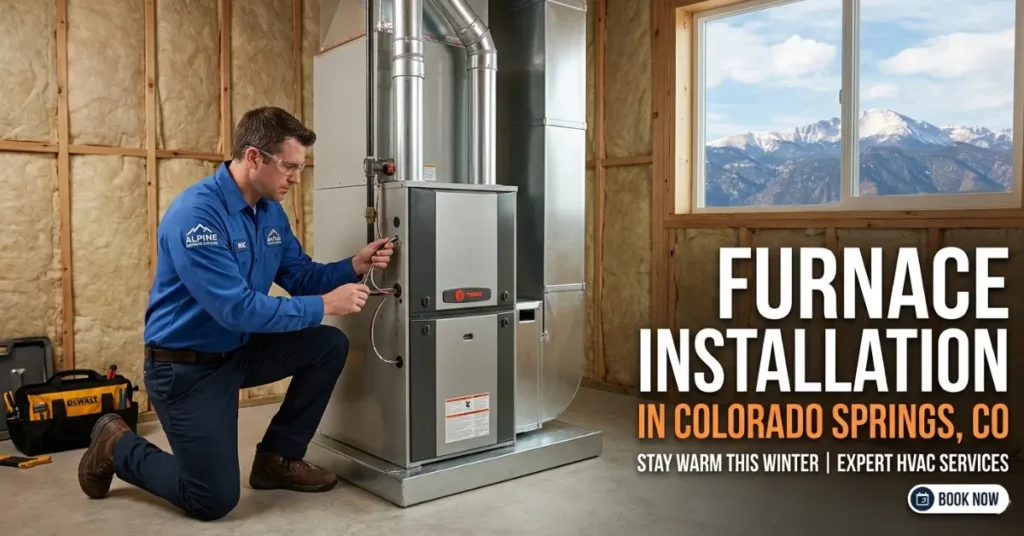
Expert Furnace Installation in Colorado Springs for Energy-Efficient Heating
Latest Blogs
-
 Furnace Repair in Colorado Springs – Reliable Heating When You Need It Most.
 -
How to Install AC in Colorado Springs: Choosing the Right System & Installer
-
Heat Pump Maintenance Colorado Springs | Expert HVAC Service
-
The Ultimate Guide to AC Repair Colorado Springs
-
AC Maintenance: Keep Your Cooling System Running Efficiently with Local HVAC Repair Experts

Local HVAC Repair Experts Proudly Serving Colorado Springs.